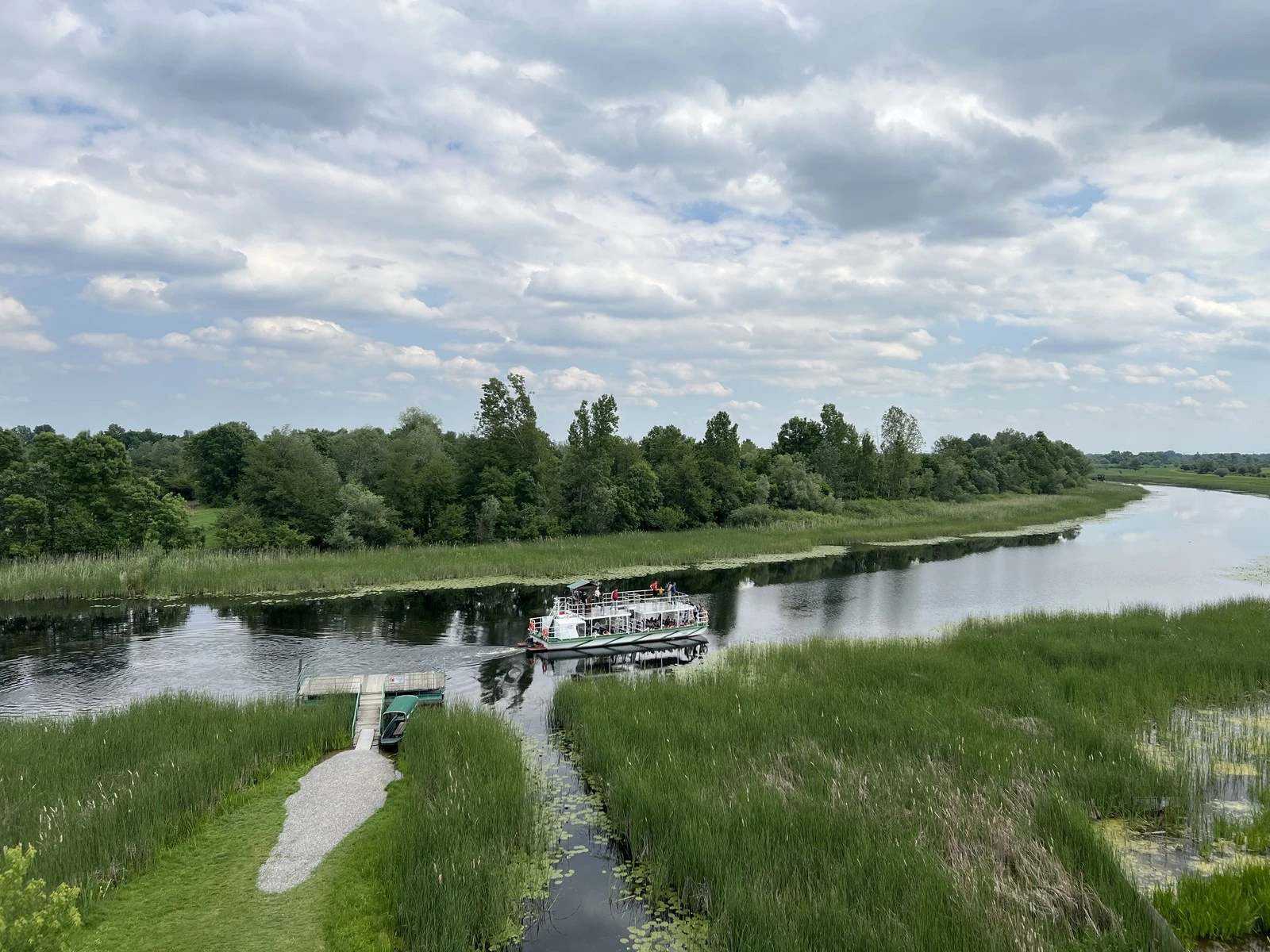
The Zasavica Special Nature Reserve is one of the most important protected wetland areas in Serbia, known for its rich flora and fauna, as well as rare plant and animal species.

Policy Training

By May, the partners of the Sava TIES project will organize online training sessions for interested parties on the topic of managing invasive alien species in the countries through which the Sava River flows. So far, training sessions have been held in Croatia (March 25, 2021), Bosnia and Herzegovina (April 7, 2021) and Slovenia (April 8, 2021), while the last one will be held in May in Serbia (May 5, 2021). The training is intended for employees of companies, institutions andorganizations whose work involves the management of natural areas or natural resources and who face the challenges of managing alien species. The response to the training sessions conducted so far has been excellent, as evidenced by the total number of participants, exceeding one hundred.
Invasive alien species are one of the biggest environmental challenges. Through global trade and human movement, many new species have been introduced to new areas. Some of them become invasive – they establish stable populations in new environments, their numbers grow, and they expand spatially. Invasive alien species have a negative impact on biodiversity and ecosystem services, and some also adversely affectthe economy or human health.
Non-native species are now part of our everyday life. Many invasive plants are so widespread that it is not easy to walk along a stream and not see at least some of them. But that shouldn’t be a reason for despair. This should be understood as a warning about the enormous invasive potential of certain species. And we should use this, along with our improved understanding of the invasion process, to prevent new introductions. Capacities and resourcesfor managing alien species will never be enough to deal with all alien species. Therefore, to achieve the best possible results, we will also have to learn to choose our battles wisely and to collaborate with all sectors,“ said Jana Kus WeenVliet.
The training sessions were organized and conducted by employees of the following institutions: the Public Institution Lonjsko Polje Nature Park and the Public Institution Green Ring of Zagreb County in Croatia, the Una National Park and the Center for the Environment in Bosnia and Herzegovina, and the Public Institution Ljubljansko Barje Landscape Park in Slovenia; with the support of external expert Jane Kus Veenvliet from the Symbiosis Institute. The final training session will be conducted by partners from Serbia –Provincial Institute for Nature Conservation of Vojvodina, Public Enterprise „Vojvodinašume“ and the Movement of Foresters Sremska Mitrovica. Participants in these training sessions have been, or will be, informed about recent progress in understanding the spread, outcomes, and management of invasive species. They were presented with the results of the Sava TIES project and measures to improve the management of invasive alien plants in the Sava River basin. The participants wereThey also discussed obstacles and solutions for improving the management of invasive alien species in specific cases such as the plants Amorpha fruticosa, Solidago canadensis, Fallopia japonica, Parthenium hysterophorus, or Galium aparine. The training concluded with an important message that alien species do not recognize national borders, and therefore cross-border and intersectoral cooperation are key to their effective management.


