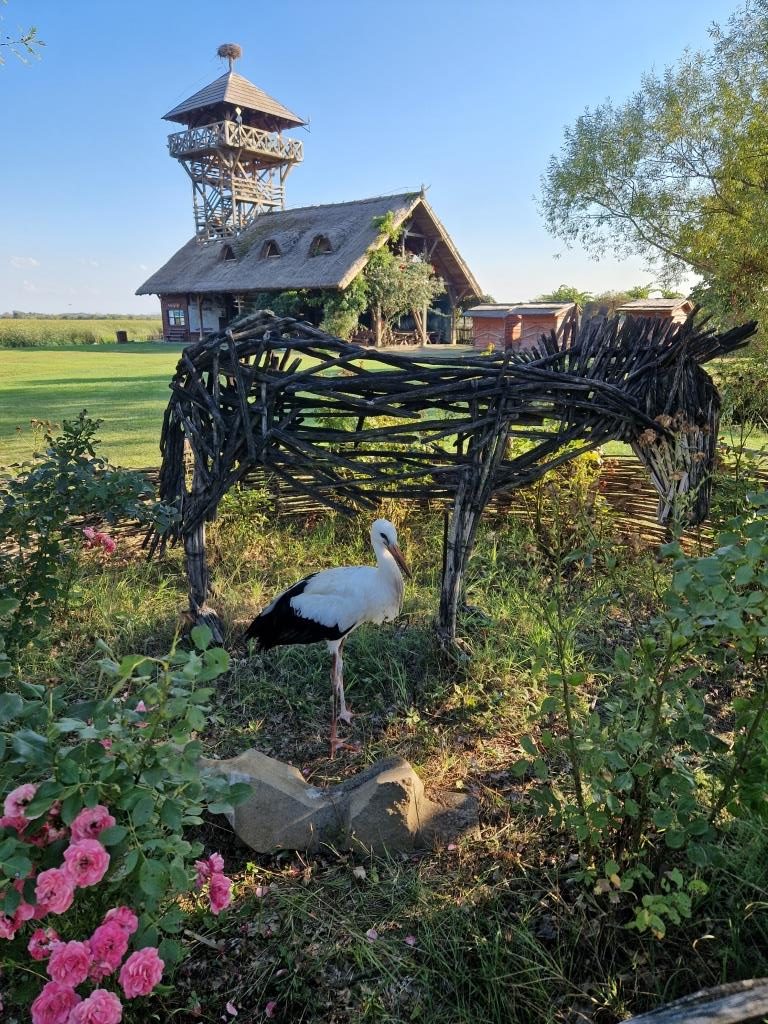
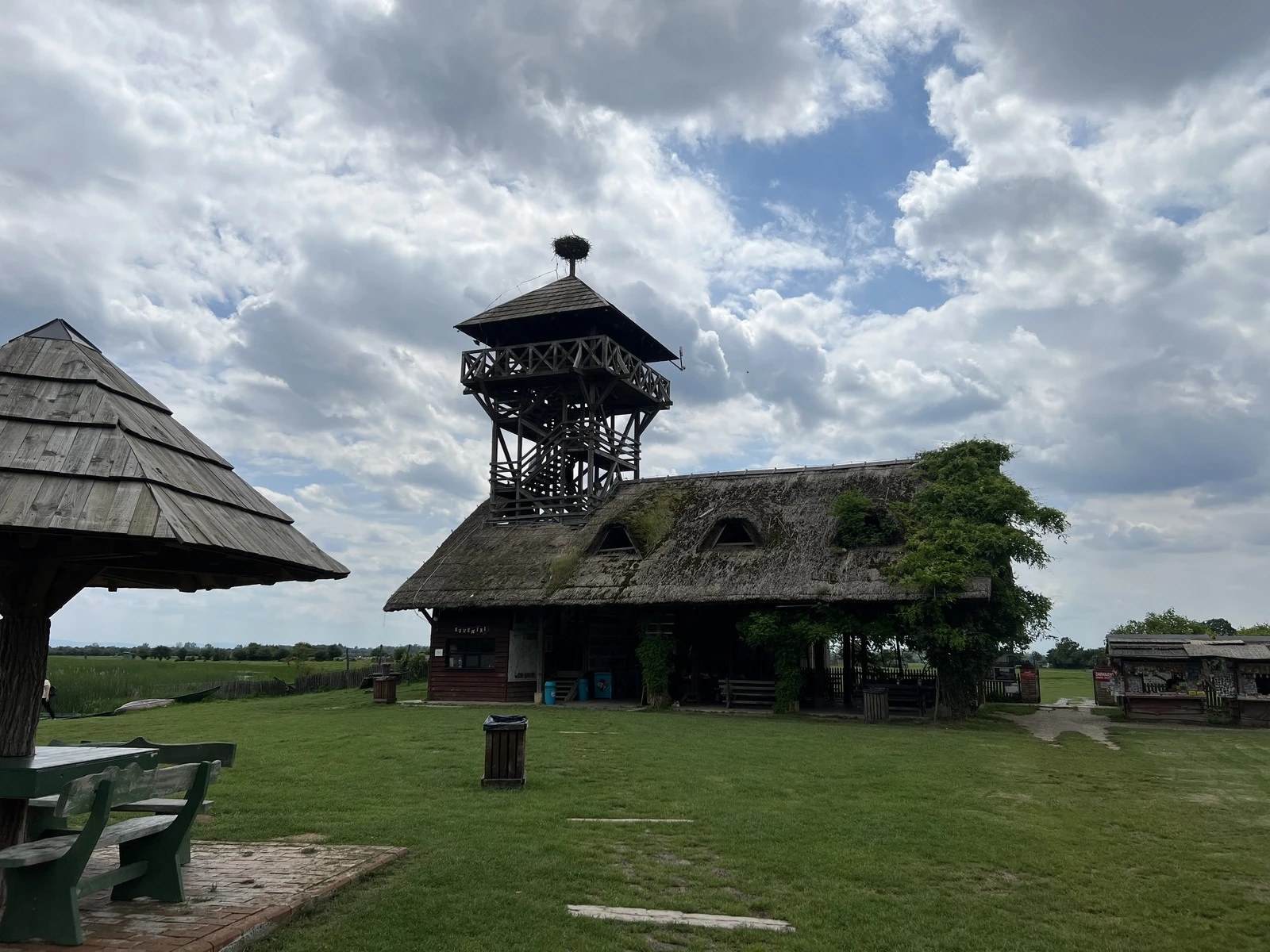
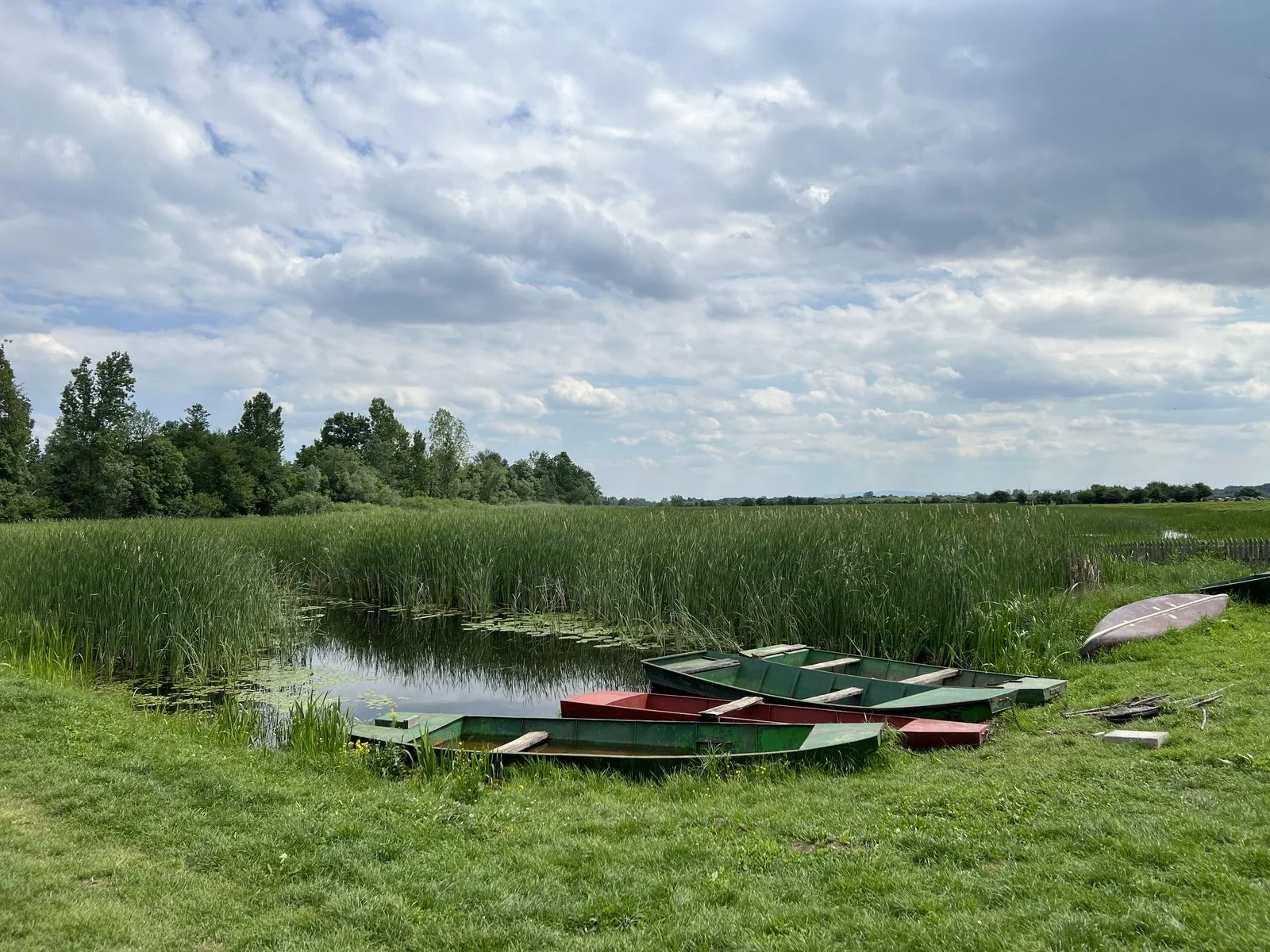
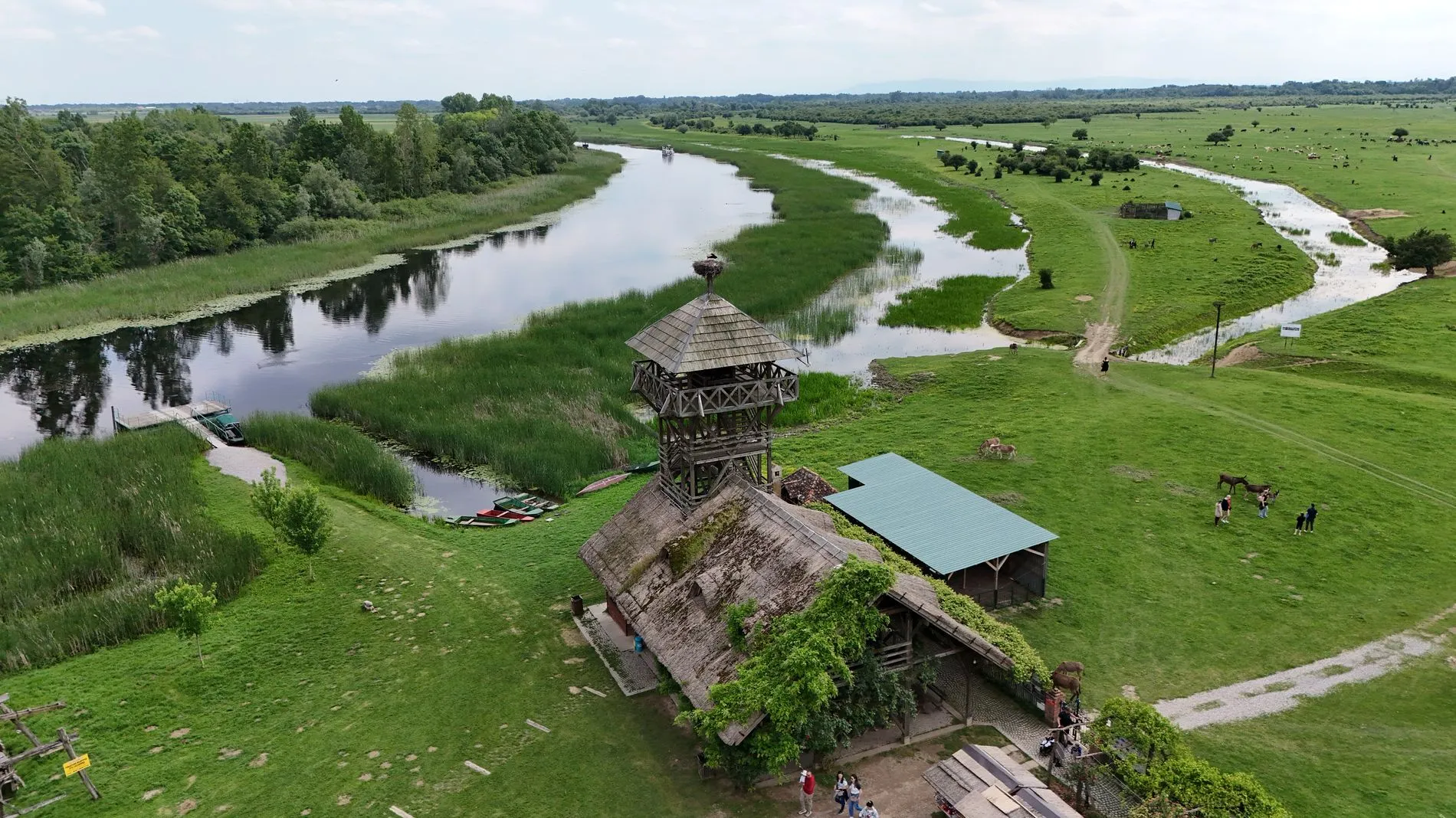
The Zasavica Special Nature Reserve is one of the most important protected wetland areas in Serbia, known for its rich flora and fauna, as well as rare plant and animal species.

Reintroduction of beavers to Serbia - Zasavica 2004
How beavers returned to Serbia: The story of Zasavica and new habitats
The return of the beaver to Serbia is one of the most successful stories of the restoration of a lost species in our region. In addition to enriching biodiversity, the beaver, as an „ecosystem engineer,“ also creates new habitats – its dams increase water retention, form wetlands, and benefit other animals and plants.
Reintroduction
of the beaver in Serbia
Zasavica 2004
The European beaver, an animal that was once widespread in the Balkans, completely disappeared from our region at the beginning of the 20th century. The last specimens in Serbia were hunted down at that time, causing this species to lose its natural habitat in the Posavina marshes and large rivers. However, thanks to well-planned reintroduction projects, the beaver has returned to our waters – and it is preciselyThe Zasavica Special Nature Reserve has become the focal point of this story.
First steps towards returning
In early December 2004, beavers were reintroduced into the wild in Serbia. The first location was the Zasavica Nature Reserve, and soon after, beavers were also introduced to the Obedska Bara Nature Reserve. The project was carried out in collaboration with the Faculty of Biology in Belgrade, the Bavarian Association and the Zasavica Special Nature Reserve, and a total of 31 individuals were released – divided into four families and several individual animals.
Before being released, each beaver was fitted with a microchip, which enabled precise monitoring of their movements, health status, and survival in the new conditions. This was a crucial step, because it was the only way to monitor the success of the entire project.
Expansion beyond the reserve
Already in the first few years, beavers demonstrated their remarkable ability to adapt to their new-old habitat. Their dams, lodges, and feeding signs quickly became evident, and the population began to expand beyond the boundaries of the reserve.
In addition to numerous individual sightings, four new territories where entire beaver families have formed have also been recorded:
- on the Sava River near Martinci,
- on the Sava River near Brčko (Bosnia and Herzegovina, Republika Srpska),
- in the Bitva Canal near Glušac,
- in the Jadar River near Lešnica, close to Loznica.
This expansion is the clearest sign that the reintroduction has been successful. The beaver has not only survived in its new environment, but has also begun to occupy new habitats and reclaim its ecological role.
Mortality – The Natural Challenges of Return
Of course, the return of the beaver was not without its challenges. Mortality is always a crucial factor when assessing the success of such projects. So far, six cases of death have been recorded in Zasavica. For two individuals, the cause could not be precisely determined – only the skeleton of one was found, while the other was in an advanced stage of decomposition. Three individuals died of natural causes, most likely due to illness, while one beaverwas killed in a car accident just three days after his release.
Nevertheless, the mortality rate is relatively low compared to the total number of released individuals, which is considered a great success in reintroduction projects.
Beavers then and now – historical perspectives
Numerous historical records confirm that the beaver is not a stranger to our waters. During the first half of the 19th century, although already scarce, beavers were still present along major rivers such as the Danube, Sava, and Morava. The famous naturalist Alfred Brehm mentions the travel writer Taube from 1777, who provides an interesting piece of information – a „lodge“ with an entire family of eight beavers was found near Mitrovica.
These records show that the beaver was once an integral part of our ecosystems, but it completely disappeared due to human intervention. Its return today, after more than a century, has not only ecological but also symbolic significance.
A symbol of success and new opportunities
The return of the beaver to Serbia is one of the most successful stories of the restoration of a lost species in our region. In addition to enriching biodiversity, the beaver, as an „ecosystem engineer,“ also creates new habitats – its dams increase water retention, form wetlands, and benefit other animals and plants.
This project demonstrates that nature has the capacity to recover, but that it also requires human willpower and the collaboration of experts. Today, the beaver in Zasavica and Obedska Bara is proof that successful projects for the conservation of endangered species can also be implemented in Serbia.
Its return is not only a scientific endeavor, but also a reminder that humans and nature can coexist, provided that habitats are preserved and species are protected.
| LOKACIJE | BROJ JEDINKI | PORODICA (da/ne) |
|---|---|---|
| Zasavica II – Turske livade (kod Vizitorskog centra) | 5 | + |
| Zasavica I – Valjevačke šume (kod Acine kolibe) | 7 | + |
| Zasavica I – Šumareva ćuprija | 1 | – |
| Zasavica I – Vrbovac I | 1 | – |
| Zasavica I – Vrbovac II | 1 | – |
| Zasavica I – Vrbovac III | 4 | + |
| Radenković I – Vrbovac I | 3 | – |
| Radenković I – Vrbovac II | 1 | – |
| Radenković I – Vrbovac III (Gajića ćuprija) | 3 | – |
| Banovo Polje I – Trebljevine I | 2 | – |
| Banovo Polje II –Trebljevine II (Ljubinkovića ćuprija) | 3 | + |