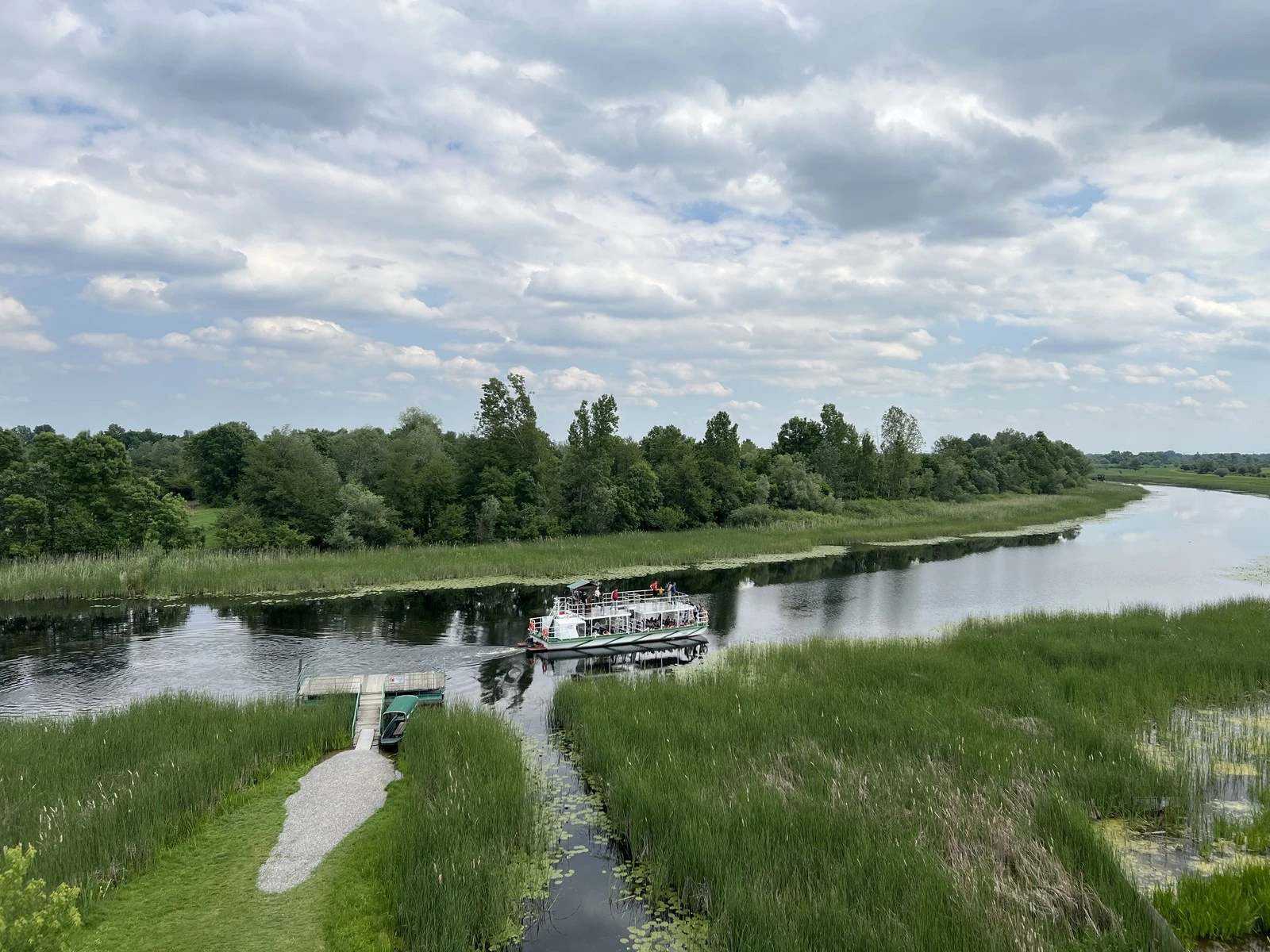
The Zasavica Special Nature Reserve is one of the most important protected wetland areas in Serbia, known for its rich flora and fauna, as well as rare plant and animal species.

Get to know invasive plants – Amorpha

False indigo or desert indigo (Amorpha fruticosa) grows as a branching shrub with upright, thornless shoots that can reach 4 to 5 meters in height and spread twice as wide. It is native to the central and eastern parts of North America, where it grows in sparse deciduous forests and prairies. It was first introduced to Europe in 1724 as an ornamental species, while it appeared in our territory in the first decade of the last century.The species grows in moist soil along the banks of rivers, streams, ponds, in ditches, and in open and semi-open moist forests, displacing native species. It thrives in both acidic and neutral soils, and has also adapted to infertile, dry, and sandy soils. It thrives equally well in challenging conditions where water lingers for much of the year, as well as in saline soils. On the invasiveness scale, it is classified as highly invasive.herbsIf you spot this plant in the wild within the Sava River basin, please report your finding to us and help prevent its spread.
