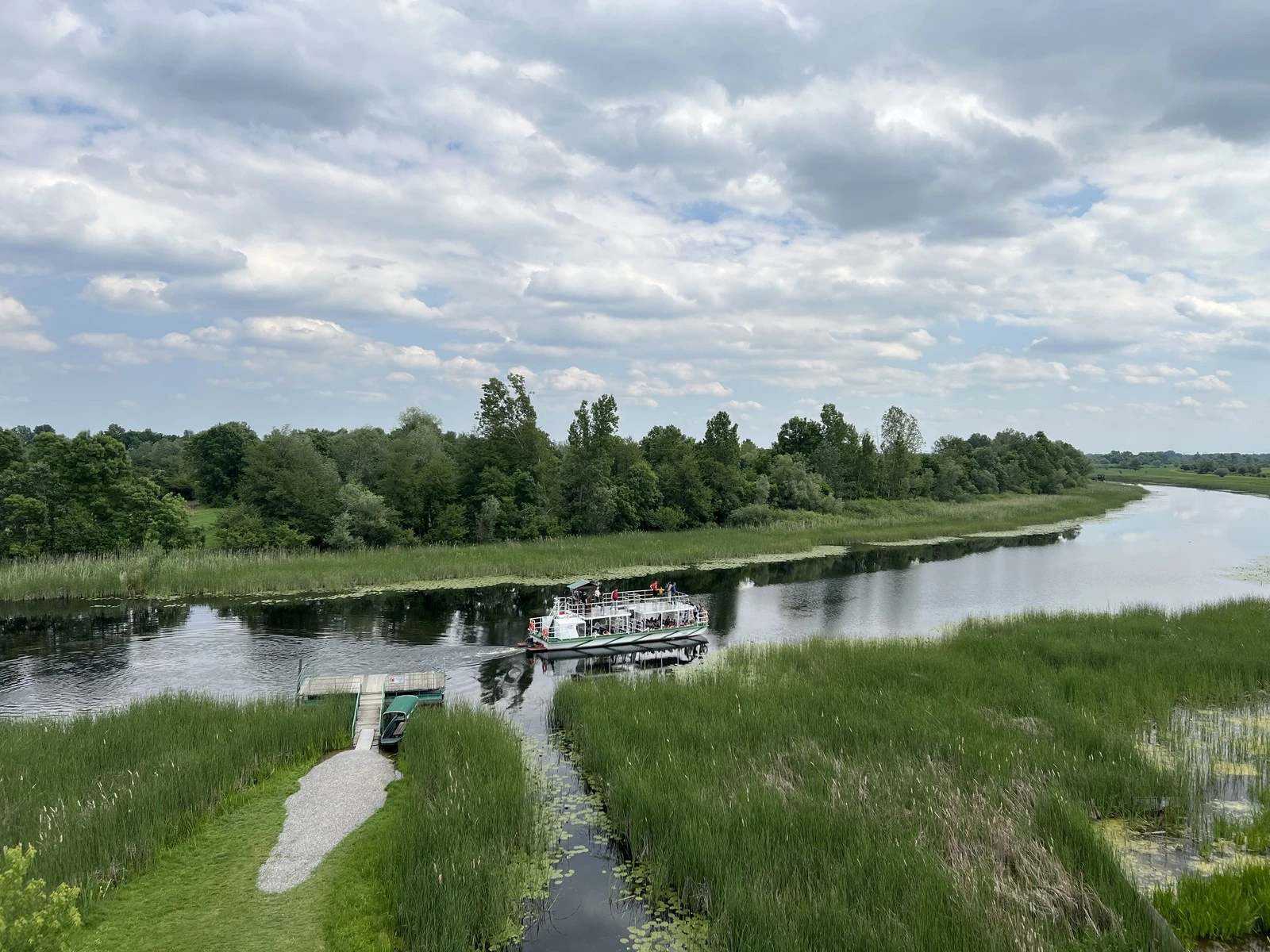
The Zasavica Special Nature Reserve is one of the most important protected wetland areas in Serbia, known for its rich flora and fauna, as well as rare plant and animal species.

What is happening in the pilot areas?

With the awakening of nature, the germination and leafing of plants, field activities have also begun as part of the Sava TIES project. Throughout last year and until the end of this year, various methods for removing invasive alien plants such as false indigo (Amorpha fruticosa), giant goldenrod (Solidago gigantea), and tree-of-heaven (Ailanthus altissima) are being tested in seven pilot areas located within protected areas in Croatia, Slovenia, Bosnia and Herzegovina, and Serbia.knotweed, glandular spurge and goldenrod. It has been proven that these species pose a threat to biodiversity, cause significant economic losses, and some also have a negative impact on human health. Invasive alien species do not naturally inhabit our region; instead, they have been introduced into the environment by humans, either intentionally or accidentally, and without malicious intent. They have no natural enemies and spread uncontrollably under favorable conditions, andsuccessfully use the Sava River for their spread. The extent of the damage they cause, as well as the costs of control, depend on the timely identification and reporting of such species. The Sava TIES project and members of the SavaParks Network are united in their aim to find the most effective and cost-efficient solution for mitigating the negative impact and controlling invasive alien plants. Here is a brief overview of activities from the field.
Ljubljansko Barje Landscape Park (Slovenia)
In the spring, summer and autumn of last year, the effectiveness of various methods for removing Canada goldenrod (Solidago canadensis) and giant goldenrod (Solidago gigantea), Himalayan balsam (Impatiens glandulifera) and tree of heaven (Ailanthus altissima) was tested in the Ljubljansko Barje Landscape Park. Mulching, mowing and cutting are methods tested for removing goldenrod. The Himalayan balsam was removed by mulching, andThe manual removal method was also tested. Using a tool called the „extractigator,“ the tree-of-heaven trees were removed. Before removing the plants, the cover was measured in percentages, the number of individuals and their average height. The same activities will be carried out this year to ensure that the data is comparable and measurable.

Odransko and Lonjsko Polje (Croatia)
The removal of false indigo (Amorpha fruticosa) from overgrown areas with the aim of restoring grassland vegetation was carried out on 10 hectares near Osekovo in the Lonjsko Polje Nature Park and on 4 hectares near Veleševac in Odransko Polje. The work was carried out using a tractor-mounted mulcher. False indigo overgrows large areas of these fields and creates problems for livestock breeders, farmers, the flood defense system, native plants, andanimals. In Lonjsko Polje, pilot areas were cleared and divided into three parts to test different methods. Thus, one part was left to natural development, another part was designated for mowing, and the third for livestock grazing.

Protected habitat „Tišina“ (Bosnia and Herzegovina)
In the first half of 2020, the removal of false indigo (Amorpha fruticosa) and, to a lesser extent, the presence of boxelder maples (Acer negundo) and wild cucumbers (Echinocystis lobata) was carried out. These species were planted along the Tišina pond – the youngest protected area in BiH, designated in 2019 – as a result of both intentional and unintentional human actions. Over an area of approximately 2.5 hectares, unwanted plants were cut down and removed.plants. Occasional maintenance is planned by the end of this year, and native tree species will be planted in the fall with the aim of restoring the habitat. The situation on the ground will be monitored through regular checks for the presence of invasive alien species, and the results will be compared with the initially observed conditions.
Una National Park (Bosnia and Herzegovina)In the Una National Park area, Japanese knotweed (Reynoutria x bohemica) – a species that poses a serious threat to river ecosystems – is being eradicated. Mechanical (cutting and manual uprooting of plants) and chemical (application of agents at the end of the growing season) removal methods were employed. In the spring of this year, the pilot areas were subjected to the grazing method.
Obedska Bara (Serbia)In the Special Nature Reserve Obedska Bara, false indigo (Amorpha fruticosa) was removed together with its roots from an area of approximately 5.5 hectares. This increased the water zone in the reserve by about 1.6 hectares. During this year, it is planned to monitor the status of birds, fish, and the regrowth process.Zasavica (Serbia)
The invasive alien species common milkweed (Asclepias syriaca) was removed from the Zasavica Special Nature Reserve. Methods of mechanical (manual pulling and mulching) and chemical (application of herbicides at the end of the growing season) removal of this plant were tested. The total area from which the plant was removed is 52 hectares. Prior to the removal activities, monitoring of the abundance of this species was conducted, which will berepeated again this year.
 The effectiveness of the methods implemented in all pilot areas will be measurable in the coming years, as the eradication of invasive alien species is a long-term and demanding process whose success becomes evident only after an extended period. For future actions, follow us on our websites and social media.
