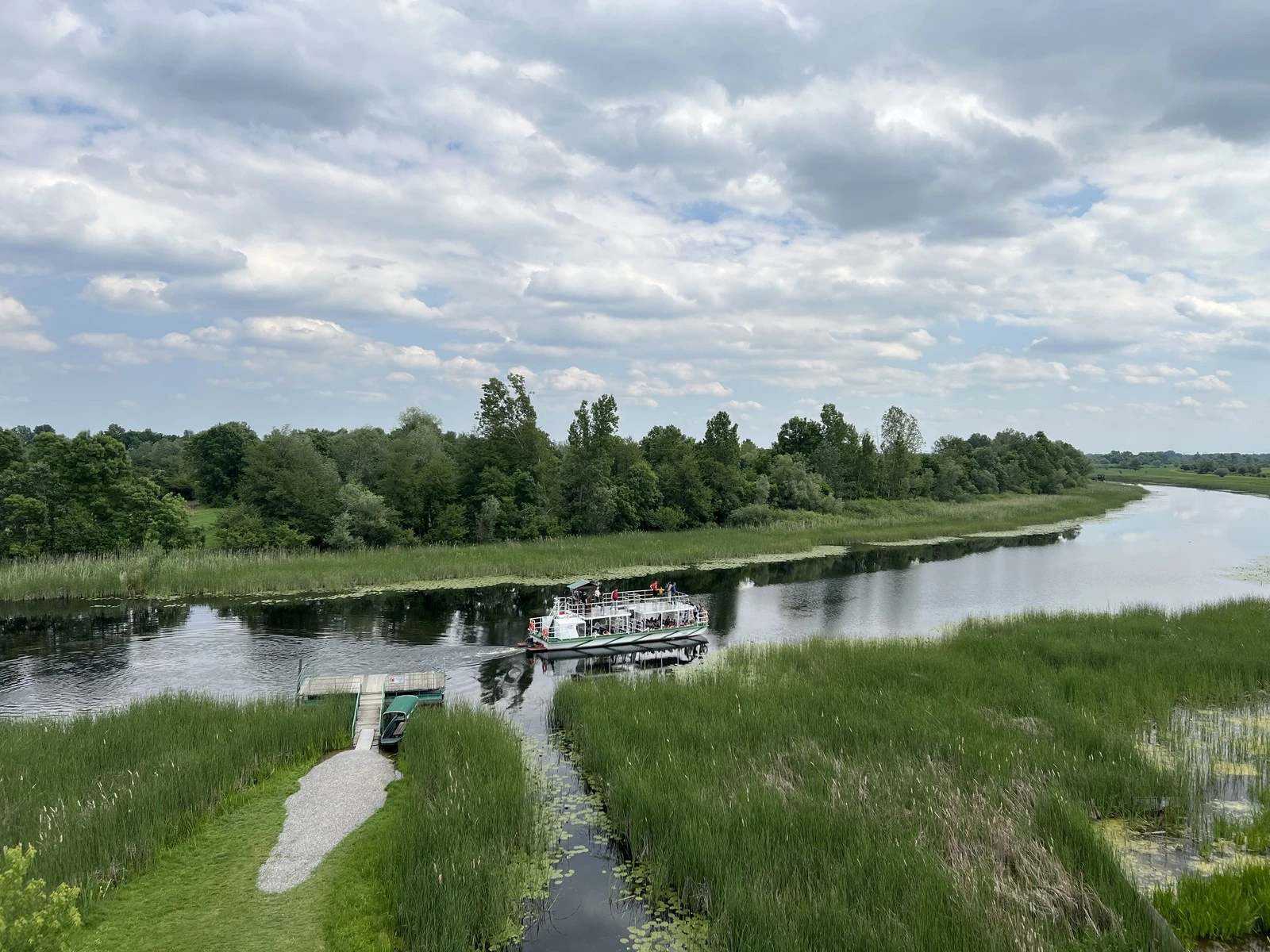
The Zasavica Special Nature Reserve is one of the most important protected wetland areas in Serbia, known for its rich flora and fauna, as well as rare plant and animal species.

Meet an invasive alien species – the common cocklebur

The gypsy feather is a herbaceous perennial plant with a robust structure, reaching a height of 80 to 150 cm. It has a branched network of roots that resembles a rhizome (underground stem). New stems grow very successfully from these parts, and this plant is extremely successful in vegetative propagation. The flowers are small and clustered in large inflorescences with a pleasant, sweet scent and a color ranging from cream to crimson-red. They are pollinated by insects. The leaves arepositioned opposite each other and measuring 15 to 25 cm in length. It blooms from June to August, and in the fall, it develops fruits about 8 cm long that resemble a parrot. It originates from the eastern part of North America. It was introduced to Europe in the 17th century as an ornamental plant, and it can still be found in many gardens today. In literature, it is first mentioned in Croatia in the 19th century. It primarily appears in habitats of degraded quality due to human activity andwhere its natural competitors are not widespread. It is most commonly found in neglected fields and pastures, along river valleys, along roads and railway lines, on river embankments, and similar locations.
Initially, it was thought that this plant could be used in many ways. The young shoots can be eaten after soaking in warm water, in which case they serve as a kind of substitute for asparagus, but it was later discovered that they are slightly toxic at that stage. Juice, wine and essential oils were made from the flowers, while silk and insulating material were made from the „hair“ of the seeds, oil was pressed from the seeds, and its milkyAttempts were made to use the sap to make natural rubber. Because of all this, it was even cultivated in the late 19th century. It soon became apparent that it was completely uneconomical for these purposes. The only cost-effective use is in beekeeping, i.e., for honey production. It causes significant direct damage by overgrowing fertile soil, vineyards, young forest plantations, and railway lines. It inhibits the growth of natural plant communities.Removing it is very expensive.
How do I remove it?
Spraying with herbicides has proven to be the most effective method of eradication, but it should not be used near aquatic habitats and in protected areas. Frequent mowing is effective for reducing their numbers and is also a healthier option for both humans and nature. It is also possible to use sheep grazing, but they should generally be fenced in a smaller area to force them to eat the common milkweed as well, and becauseFor the sake of animal health, this method must not be used for an extended period of time.
DID YOU KNOW?All parts of the plant contain a milky sap that is poisonous and causes diarrhea, difficulty breathing, cramps, and balance problems.

Overgrowth of areas (Author: Public Institution Zeleni prsten)

Overgrowth of areas (Author: Public Institution Zeleni prsten)
Overgrowth of areas (Author: Public Institution Zeleni prsten)

Overgrowth of areas (Author: Public Institution Zeleni prsten)

Overgrowth of areas (Author: Public Institution Zeleni prsten)