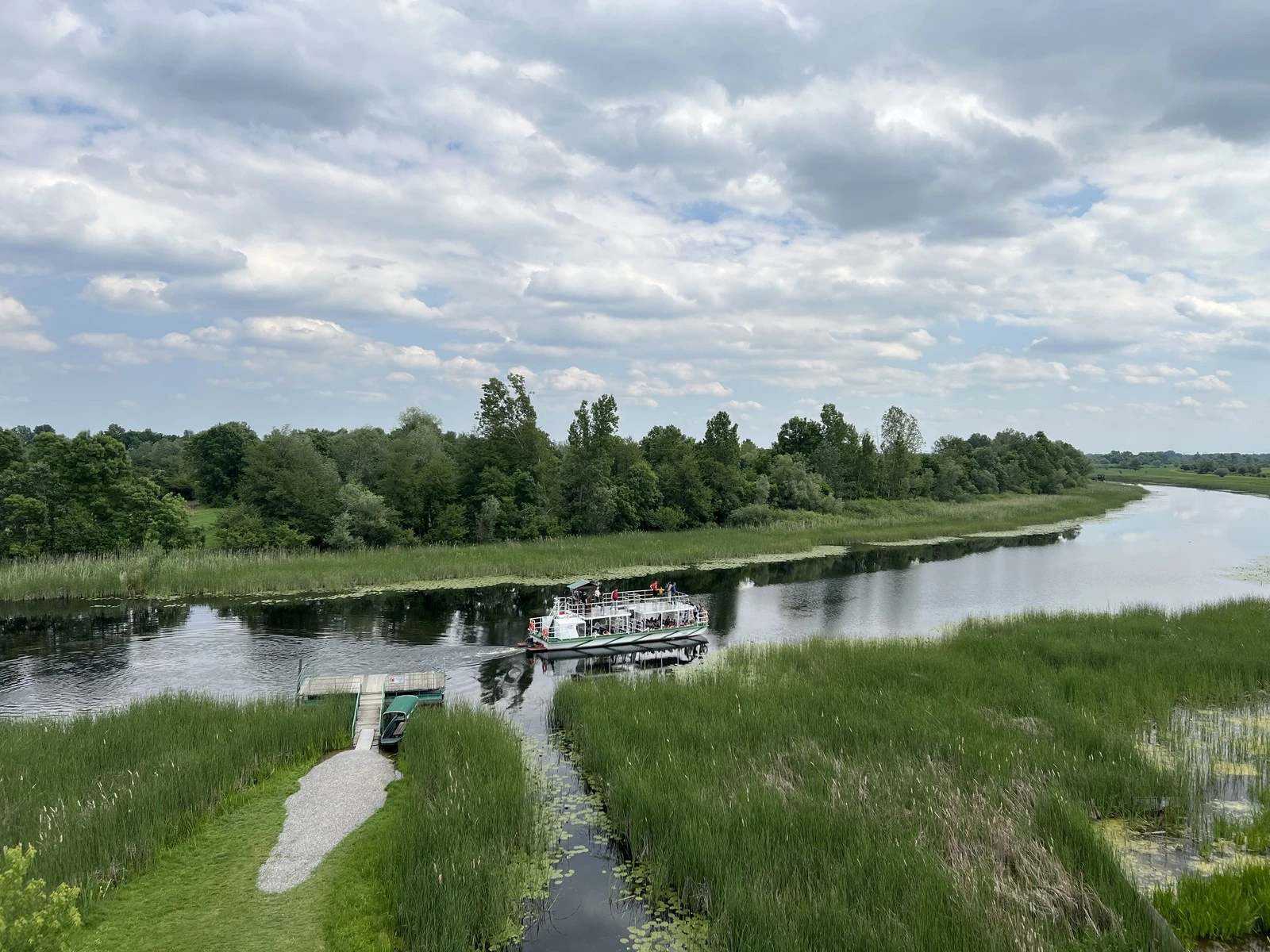
The Zasavica Special Nature Reserve is one of the most important protected wetland areas in Serbia, known for its rich flora and fauna, as well as rare plant and animal species.

7th Meeting of Partners of the Sava TIES Project

The penultimate meeting of the project team was held on February 23, 2021. It was once again organized in a virtual format due to the circumstances caused by the global coronavirus pandemic. In addition to the meeting, the fourth regional workshop for the development and capacity building of the SavaParks network and the third training session with examples of good practices in the management of invasive alien species were held on February 24, 2021. At the workshop and trainingMore than thirty participants and members of the SavaParks network took part.
The Network brings together around 20 members from 13 different institutions and 5 countries (Slovenia, Croatia, Bosnia and Herzegovina, Serbia, and Germany). In order for the Network to become stronger and more effective in protecting the natural and cultural values of the Sava River basin, its formal registration was discussed at the workshop. The members’ aspiration is for the Network to start operating as a formally registered body, recognized and known in all five countries andmore broadly. The goal is for the Network to remain active and effective, and independent solely of the projects that currently enable its operation. The members will continue their discussion on this topic at the final meeting of the Sava TIES project in May, when the future of the Network will be defined.
For the professional development of Network members and project partners, a training session was organized, featuring examples of good practices in managing invasive alien species, with a focus on plants. The lecturers, who generously shared their experiences and knowledge with the members of the Network, are world-renowned experts in the field of invasive species from various parts of the world – South Africa, Canada, the United States,Türkiye, Bulgaria, Slovenia, and Serbia. This network of global knowledge has resulted in an exceptionally valuable exchange of experiences and information, as well as in connecting experts who share the same goal – the effective management of invasive alien species.
Seven lecturers from different continents shared their experiences and practical knowledge about measures and methods for controlling invasive alien species. It is worth highlighting some of the facts that the participants had the opportunity to hear, such as the fact that river systems are one of the most important routes for the introduction and spread of invasive species, as pointed out by Dr. Llewellyn Foxcroft, an expert from Kruger National Park in South Africa.Prof. Dr. Brendon M. H. Larson from the University of Waterloo in Canada pointed out that invasive alien species are merely „passers-by“ caused by environmental changes and that they reflect broader ecological issues. Human impact is present everywhere on Earth, even in the deepest parts of the ocean, Brendon said. He presented the participants with concerning facts using a specific example where children in the conductedIn the study, they recognized more invasive than native species, and even more shocking was the realization that they were able to recognize more imaginary characters from the Pokémon cartoon than real animals. Prof. Dr. Larson’s lectureHe concluded with a question that each of us should ask ourselves: „What natural values will we leave for future generations, for our children and grandchildren?!“ Invasive alien species are a global problem, and we cannot change that, but what we can do is change our lifestyle habits,“ Larson concluded. The other speakers also shared their own experiences in the fight against invasive species with the participants.This successful training provided insights into potential solutions applicable to the Sava River basin.
